
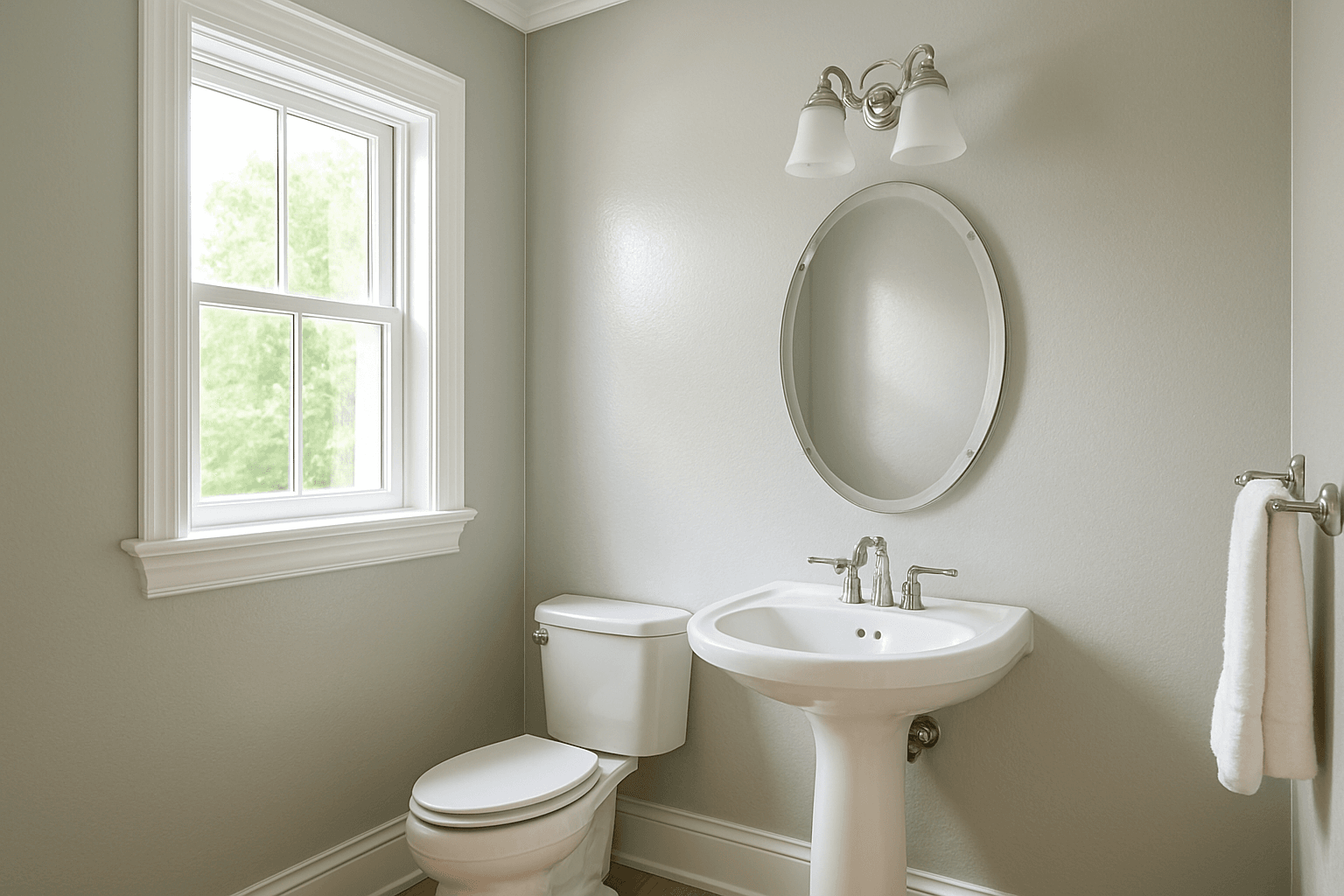
When selecting a paint finish for your bathroom, satin and semi-gloss are the two finishes most recommended because they resist moisture, clean easily, and hold up against daily humidity. Choosing the wrong sheen can lead to peeling, mildew, and surfaces that look worn within months.
Table of Contents
- Why Bathroom Paint Finish Matters More Than Color
- The Four Finishes Compared
- Satin vs. Semi-Gloss: What Paint Finish for Bathroom Works Best
- Special Cases: Ceilings, Trim, and Accent Walls
- Things to Know
- Book Your Bathroom Paint Consultation Today
- Frequently Asked Questions
Bathrooms are one of the most repainted rooms in American homes. According to the Houzz 2025 U.S. Houzz & Home Study, 24% of homeowners upgraded a bathroom in 2024, matching the share who upgraded a kitchen and ending the kitchen’s long-standing lead as the most-renovated space. Therefore, getting the finish right the first time saves real money.
Why Bathroom Paint Finish Matters More Than Color
Color gets all the attention, but finish determines whether your paint job lasts two years or ten. Bathrooms generate consistent moisture every single day. Showers steam up the walls, sinks splash, and ventilation is often limited.
A flat or matte finish works beautifully in a living room. However, it will absorb moisture rather than repel it in a bathroom. Paint finish refers to the sheen level of the dried surface. That sheen is directly tied to how much resin the formula contains. Higher resin content means a shinier surface. A shinier surface is harder, smoother, and far more resistant to moisture and scrubbing.
This is why the right finish matters just as much in a bathroom as the right primer or paint brand. Additionally, understanding finish options has become increasingly important for homeowners. The U.S. paint market is growing steadily, valued at $21.98 billion in 2025 and projected to reach $33.69 billion by 2034 at a CAGR of 4.86% (Market Data Forecast, 2026).
The Four Finishes Compared
Not every finish belongs in a bathroom. Here is a quick breakdown of how each one performs in a high-humidity environment.
| Finish | Sheen Level | Moisture Resistance | Ease of Cleaning | Best Use in Bathroom |
|---|---|---|---|---|
| Flat/Matte | None | Poor | Low | Not recommended |
| Eggshell | Very low | Fair | Moderate | Powder rooms only |
| Satin | Medium | Good | High | Main walls |
| Semi-Gloss | High | Excellent | Very high | Trim, doors, ceilings |
Flat paint has virtually no resin. It absorbs moisture instead of shedding it, making it a poor choice for any room with a shower or tub. Eggshell is slightly better, and some designers use it in powder rooms that see minimal steam. Moreover, for full bathrooms, you want satin or semi-gloss on every surface that matters.
When you think about other projects in the home, this kind of finish decision comes up repeatedly. If you are weighing the cost to paint interior of house as a whole project, bathroom finish upgrades from eggshell to satin are a small additional cost. In contrast, they pay off significantly over time.
Satin vs. Semi-Gloss: What Paint Finish for Bathroom Works Best
This is where most homeowners get stuck. Both finishes work well in bathrooms, but they serve slightly different purposes.
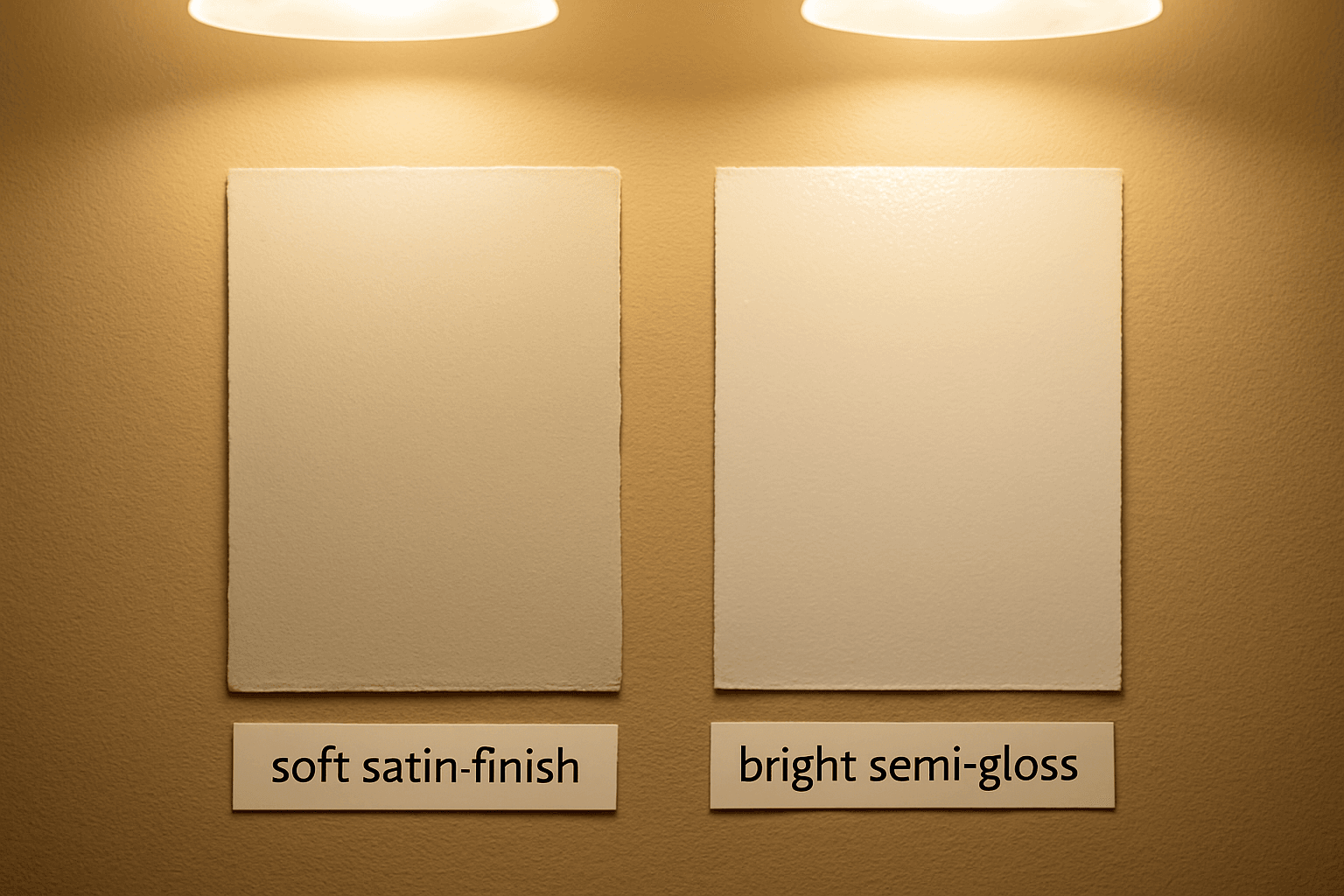
Satin offers a soft, low-reflective sheen that does not draw attention to imperfections in your walls. It is moisture-resistant and wipeable. Furthermore, satin looks elegant without being too shiny. Satin is the go-to choice for main bathroom walls because it balances durability with appearance.
Semi-gloss has a noticeably higher sheen. It reflects more light, which can make a small bathroom feel brighter and larger. It is also the easier surface to clean, which matters around sinks and tub surrounds. However, semi-gloss highlights drywall imperfections, dings, and uneven textures.
Consumer Reports recommends using a satin or semi-gloss finish in bathrooms since they are more stain-resistant and easier to clean (2024). That guidance applies to both the walls and trim.
A practical rule: use satin on the walls and semi-gloss on trim, doors, and window casings. This creates a visual hierarchy that looks intentional. As a result, the most durable finish appears exactly where the most contact and splashing happens.
If you are curious how bathroom painting fits into broader home improvement budgets, the cost to paint exterior of house is a helpful benchmark for understanding professional labor pricing by scope and surface area.
Special Cases: Ceilings, Trim, and Accent Walls
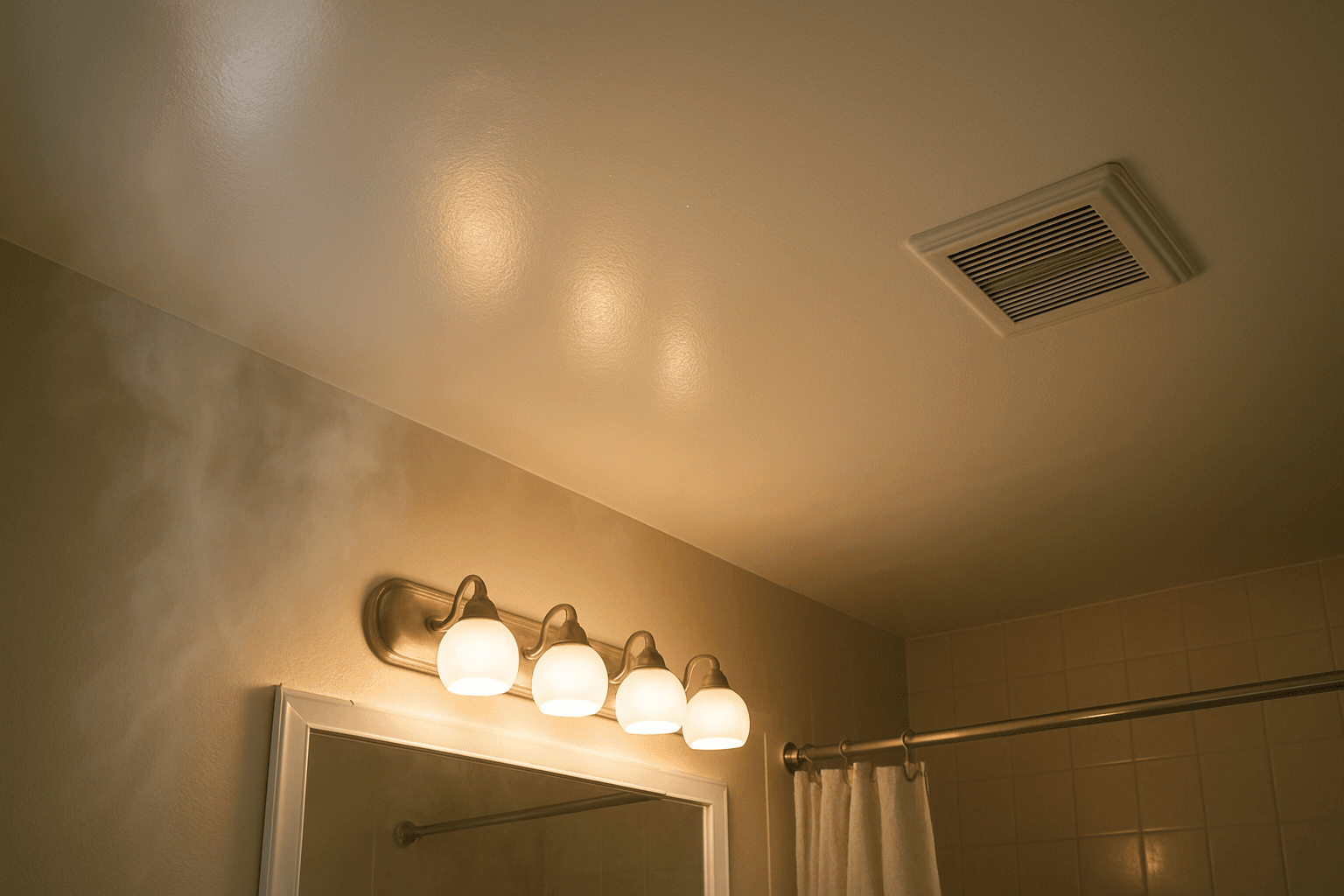
Bathroom ceilings deserve their own conversation. Because heat and steam rise, the ceiling takes a real beating. A flat white ceiling paint will show mildew staining faster than almost any other surface in the home. Therefore, use a semi-gloss or satin-rated ceiling paint with a mold-resistant additive. Alternatively, choose a product marketed specifically as bathroom ceiling paint.
Accent walls are growing in popularity. According to U.S. News, textured limewash paint is trending for bathrooms in 2026, with designers spotting dusty sage greens and rosy tones gaining traction (2025). If you want to try limewash or a textured look, confirm the product is rated for humid environments before committing.
One situation that comes up frequently in older homes is painted-over wallpaper. If your bathroom walls have wallpaper underneath, that changes the prep work considerably. In addition, our guide on how to paint over wallpaper walks through when it is viable and when you are better off removing it first.
Cabinet painting is another related decision in bathrooms with vanities. Understanding the principles of how to paint kitchen cabinets gives you a solid framework. The technique and finish selection for bathroom vanities follows the same approach.
Things to Know
- Mold-resistant additives are available for bathroom paints and are worth requesting, especially in bathrooms with poor ventilation.
- Low-VOC bathroom paints have improved significantly; you do not have to sacrifice durability for indoor air quality.
- Proper surface prep matters more than finish selection alone: peeling old paint or skipping primer will cause failure regardless of sheen level.
- According to HIRI market data, 72% of professionals reported purchasing interior paint products on behalf of customers in 2024 (HIRI 2025 Contractor Product Purchase Incidence Report), reflecting how common professional involvement is even for interior projects.
- Paint labeled “bathroom paint” is not always superior to a standard satin or semi-gloss; check the actual resin and mildewcide content on the label.
Book Your Bathroom Paint Consultation Today
At Glastonbury Professionals House Painters, we have been helping Hartford County homeowners get lasting results in bathrooms, kitchens, and beyond for over 20 years. The wrong finish in a high-humidity space costs you more in repainting within a few years. We can help you avoid that from the start. Request a free estimate and let our licensed, insured team walk you through finish selection, prep work, and color options suited to your specific bathroom.
Call us or submit your project details online to schedule your consultation this week.
Frequently Asked Questions
Q: Can I use flat paint in a powder room?
Flat paint is not ideal even in powder rooms, though it carries less risk than in full bathrooms.
Powder rooms have no shower or tub, so steam is minimal. That said, splashing from the sink and hand contact still happen. If you prefer the look of matte walls, an eggshell finish gives a similar visual result. Moreover, eggshell delivers meaningfully better washability.
Q: How many coats of paint does a bathroom need?
Most bathrooms need two coats of finish paint over a primed surface for full, even coverage.
Skipping primer or applying only one coat increases the chance of uneven sheen and early wear, particularly around corners and high-contact areas near the sink and door frame.
Q: Does paint color affect which finish I should use?
Finish choice should be based on the bathroom’s humidity and cleaning needs, not color.
Very dark colors can show brush marks and touch-ups more visibly in high-sheen finishes. Therefore, if you are painting a deep navy or charcoal wall, satin may be a better choice than semi-gloss to reduce that visual effect.
Q: How long does bathroom paint typically last?
A properly prepared bathroom painted with satin or semi-gloss can last five to ten years before needing a full repaint.
Ventilation, cleaning habits, and product quality all influence longevity. Bathrooms without exhaust fans tend to need repainting more frequently regardless of the finish selected.
Q: What paint finish for bathroom ceilings specifically?
Semi-gloss or a dedicated bathroom ceiling paint with mildew resistance is the right choice for most bathroom ceilings.
Ceilings absorb the most steam in a bathroom since heat rises. Flat ceiling paint, while standard in other rooms, will show staining and mildew growth faster in this environment. As a result, a more durable finish becomes the smarter long-term investment.