
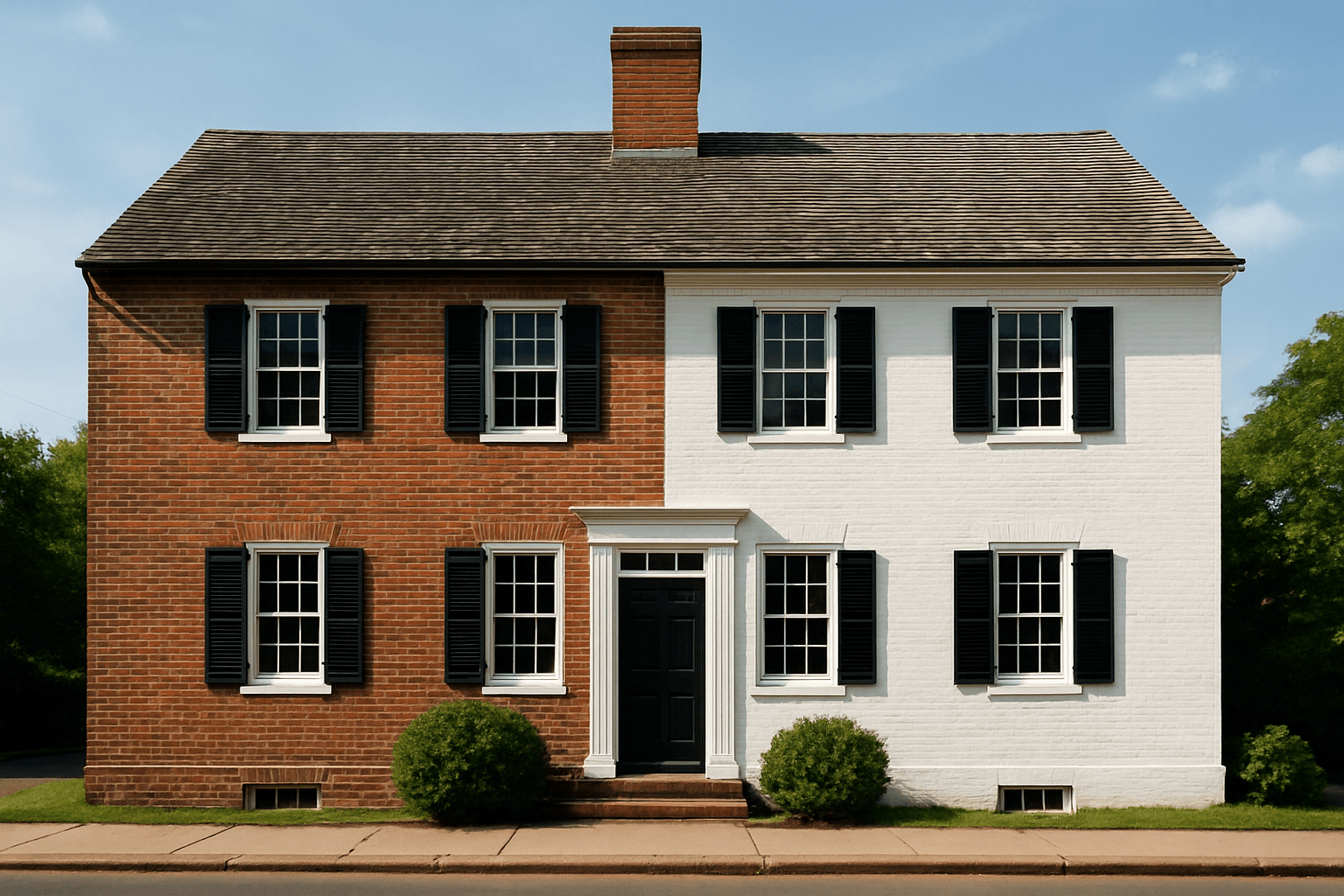
Painting a brick exterior is one of the highest-impact upgrades you can make to your home’s curb appeal. When done correctly, it protects the masonry, modernizes the look, and adds measurable resale value. This comprehensive guide explains how to paint brick exterior surfaces the right way.
Table of Contents
- Why Homeowners Are Painting Brick in 2026
- What You Need Before You Start
- Step-by-Step Process for Painting Brick Exterior
- Choosing the Right Paint for Brick Exterior
- Cost Breakdown
- Things to Know
- Paint Your Brick the Right Way
- Frequently Asked Questions
Why Homeowners Are Painting Brick in 2026
Brick exteriors have had a major style moment. According to FacadeColorizer’s analysis of 16,983 projects, painted brick accounted for 14% of all exterior simulation projects among US homeowners since 2024. Moreover, painting brick house white is the single most-searched exterior refresh on Pinterest in 2026, which tells you a lot about where design preferences are heading.
From a market standpoint, painting is broadly the most popular home improvement activity. According to the State of American Home Renovation survey (2026), painting topped the list of both completed projects (43%) and planned projects (36%). Additionally, if you’re thinking about selling, the National Association of the Remodeling Industry’s 2025 Remodeling Impact Report found that painting the entire home ranks as the top project Realtors recommend sellers complete before listing, cited by 50% of respondents.
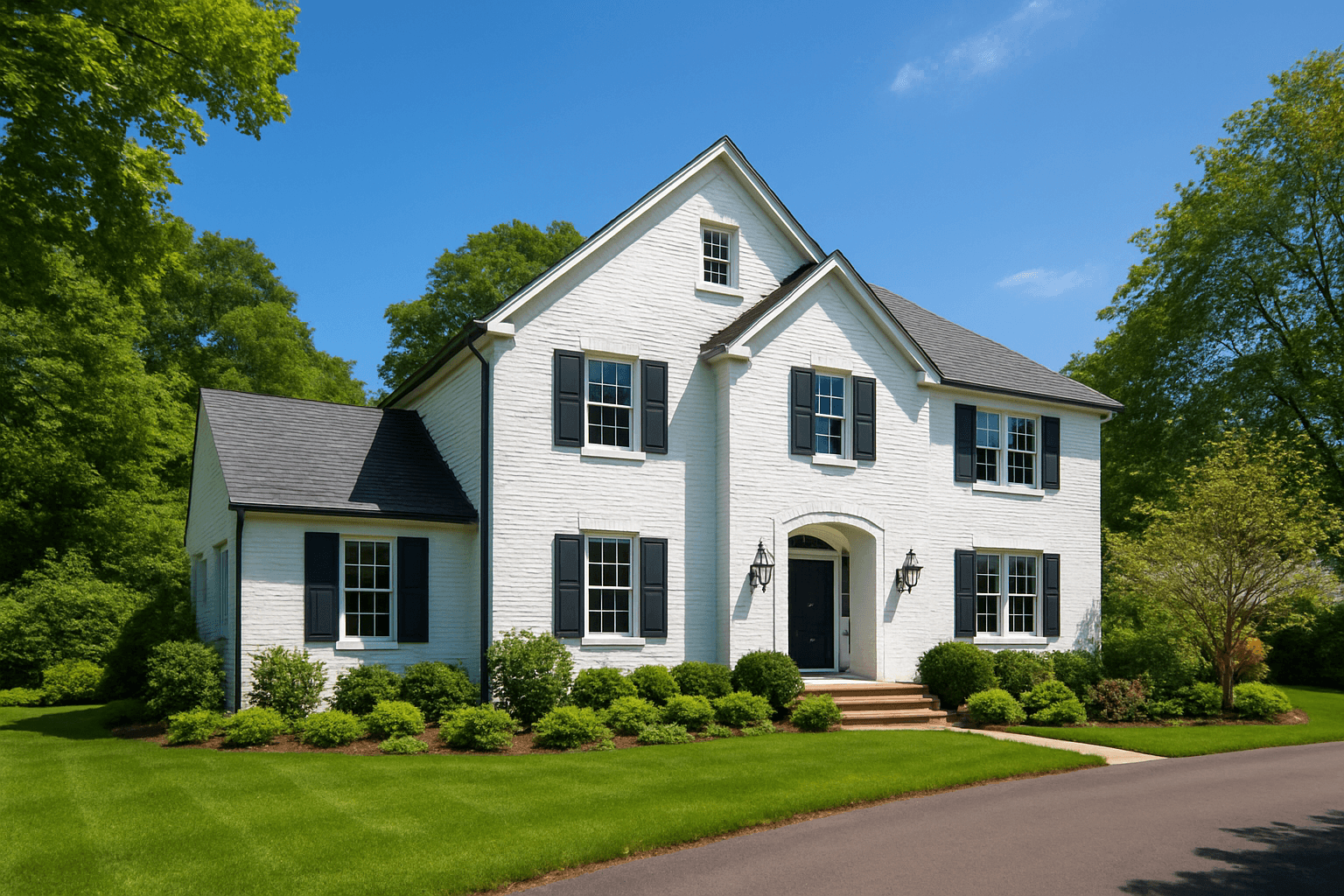
Understanding these trends matters because they inform color choices and long-term resale strategy. Among homeowners who painted, the most-loved hues are white (42%), beige (35%), and light gray (32%), according to Clever Real Estate (2024).
What You Need Before You Start
Learning how to paint brick exterior surfaces properly starts long before the first brushstroke. Skipping prep is the most common reason painted brick fails within a few years.
Tools and materials you’ll need:
- Pressure washer or stiff-bristle brush and hose
- Wire brush for mortar joints
- Masonry cleaner or TSP (trisodium phosphate) solution
- Hydraulic cement or masonry caulk for crack repairs
- Masonry primer (vapor-permeable)
- Elastodynamic or 100% acrylic masonry paint
- Rollers with thick nap (3/4 inch or thicker) and quality brush for mortar joints
- Painter’s tape and plastic sheeting for windows and trim
One critical point: brick needs to be completely dry before any product goes on. Freshly built or recently wet brick holds moisture inside. Sealing that moisture in causes paint to peel. If your brick is new construction, most masonry professionals recommend waiting at least a year before painting.
Step-by-Step Process for Painting Brick Exterior
Here’s a straightforward sequence that applies whether you’re tackling this as a DIY project or preparing for a professional crew.
1. Inspect the brick and mortar. Look for cracks, spalling, efflorescence (white salt deposits), and deteriorating mortar joints. Address any structural issues before painting, not after.
2. Clean the surface thoroughly. Pressure wash at a moderate setting (around 1,500-2,000 PSI). Additionally, scrub stubborn efflorescence with a diluted masonry cleaner. Let the wall dry fully, which can take 24-72 hours depending on temperature and humidity.
3. Repair cracks and repoint mortar. Use hydraulic cement for larger gaps. For hairline cracks, masonry caulk works fine. Smooth repairs flush with the surface.
4. Apply a masonry primer. This step is non-negotiable. A vapor-permeable masonry primer allows moisture that passes through brick to escape. This prevents bubbling and peeling down the road. Apply one full coat and let it cure per the manufacturer’s instructions.
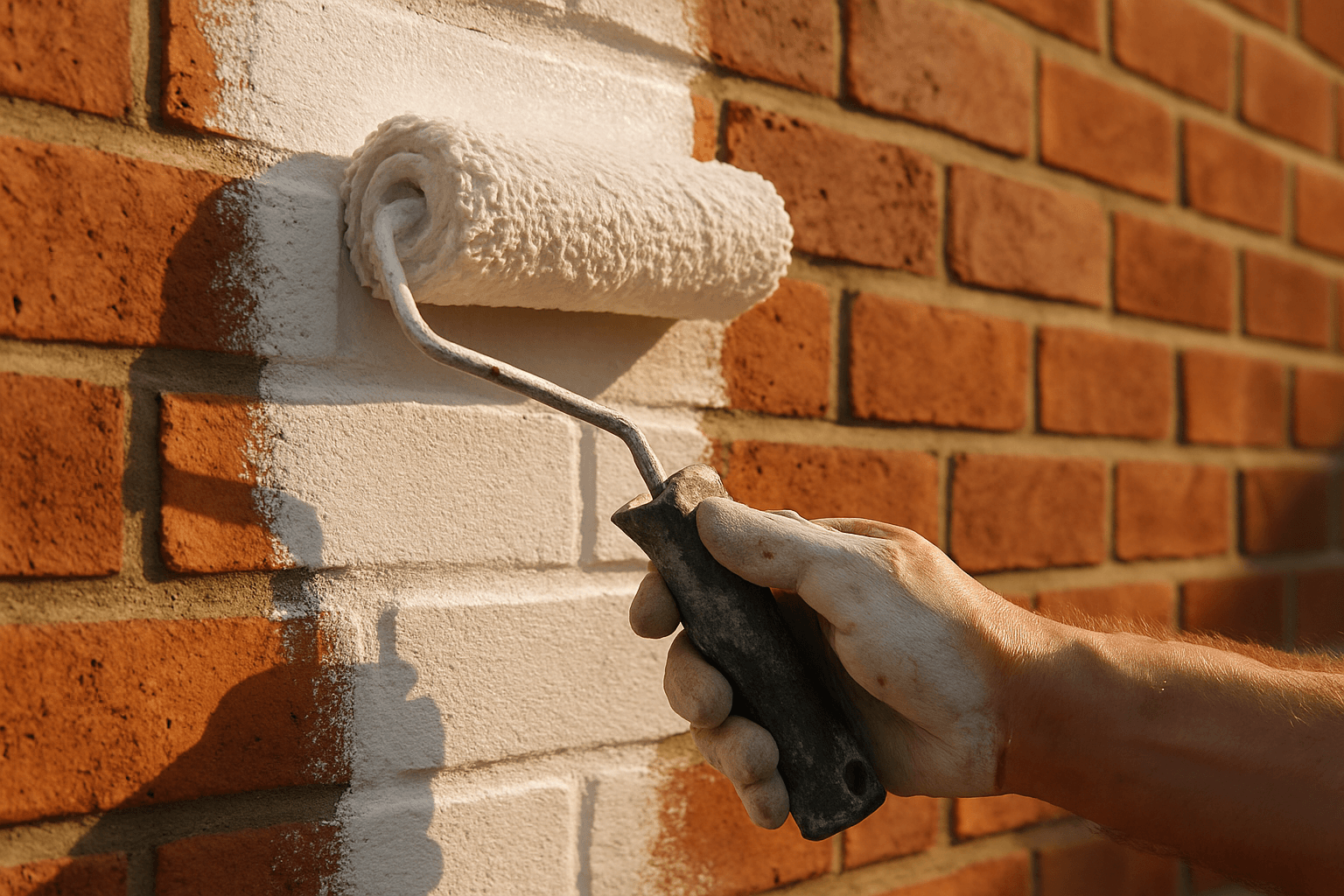
5. Apply the paint in two coats. Use a thick-nap roller for flat surfaces and a brush to work paint into mortar joints. Apply the first coat, let it dry completely, then apply the second coat. Two coats is the minimum for even coverage on brick’s porous texture.
6. Let it cure. Full paint cure on masonry can take several weeks, even if the surface feels dry to the touch. Avoid pressure washing or heavy weather exposure during this period.
Choosing the Right Paint for Brick Exterior
Not all exterior paints are suitable for masonry. This is where many DIY projects fail.
| Paint Type | Best For | Key Benefit | Watch Out For |
|---|---|---|---|
| Elastodynamic Acrylic | Brick with fine cracks | Bridges hairline cracks | Higher cost per gallon |
| 100% Acrylic Latex | Sound, stable brick | Breathable, durable | Needs solid prep |
| Mineral (Limewash) | Older or historic brick | Breathable, authentic texture | Shorter lifespan |
| Oil-Based | Rarely recommended | N/A | Traps moisture in brick |
According to GM Insights (2025), acrylic paints held 57.5% of the exterior paint market share in 2024. Water-based formulas account for approximately 77.7% of the exterior paint retail market. For brick, 100% acrylic latex or elastodynamic formulas align with both market preference and masonry-specific performance requirements.
When you’re also refreshing other parts of your home, it helps to understand the cost to paint exterior of house so you can budget accurately for the full project scope.
Cost Breakdown
Several variables affect what you’ll pay when you learn how to paint brick exterior surfaces and decide whether to hire out:
- Surface area: Brick absorbs more paint than smooth siding, so material costs run higher per square foot.
- Condition of the brick: More repairs and prep time add to labor costs.
- Number of coats: Two is the minimum; damaged brick may need three.
- Geographic labor rates: Rates in Connecticut’s Hartford County reflect New England’s cost of living.
If you’re also considering interior work during the same project window, reviewing the cost to paint interior of house can help you plan a realistic total budget.
According to Vander Kolk Painting (2025), the US house painting market was valued at $24.4 billion in 2024. This reflects the ongoing demand for professional painting services. For exterior projects that include brick and trim, getting a detailed estimate specific to your home’s size and condition is the most reliable way to plan costs.
If you’re curious about how to paint kitchen cabinets while you’re refreshing the exterior, many contractors bundle interior and exterior work for a more efficient timeline. Similarly, if you’re dealing with older walls indoors, knowing how to paint over wallpaper can save time during interior prep.
Things to Know
- Once you paint brick, it is very difficult to reverse. The paint bonds into the porous surface and requires chemical stripping or sandblasting to remove.
- Vapor permeability matters more on brick than on wood or fiber cement. Brick naturally absorbs and releases moisture. A paint or primer that traps moisture will peel within a few seasons.
- Efflorescence will continue to develop if there’s a water intrusion problem elsewhere. Issues such as failing roof flashing or poor grading cause this. Paint will not solve underlying moisture issues.
- Color matters for maintenance: darker colors show chalk and dust more readily on rough brick textures than on smooth siding.
- Historic brick (pre-1930s) is often softer and more porous than modern brick. It benefits from limewash or mineral paints that breathe more freely.
Paint Your Brick the Right Way
At Glastonbury Professionals House Painters, we’ve been helping Hartford County homeowners protect and beautify their homes for over 20 years. If your brick exterior needs a refresh, request a free estimate today and get a detailed assessment of your masonry’s condition before a single drop of paint goes on. Tell us your project goals, and we’ll put together a clear, honest plan that fits your timeline and budget.
Frequently Asked Questions
Q: Does painting brick exterior hurt the resale value of a home?
Painted brick can help or hurt resale value depending on execution quality and buyer preferences in your local market. A professionally painted exterior in a neutral color generally improves curb appeal and supports higher listing prices. However, poorly done or peeling paint can be a red flag for buyers concerned about maintenance costs.
Q: How long does paint last on a brick exterior?
Properly applied exterior masonry paint typically lasts 15-20 years before requiring a full repaint. Factors that shorten that lifespan include skipping primer, painting over wet or contaminated brick, using interior or non-masonry paint, or failing to address existing moisture problems before painting.
Q: Can you paint brick exterior in cold weather?
Most masonry paints require temperatures above 50°F during application and for at least 24 hours after. Painting below that threshold can prevent proper adhesion and curing. In Connecticut, this limits the exterior painting season primarily to late spring through early fall.
Q: How many gallons of paint do I need for a brick exterior?
Brick typically consumes more paint per square foot than smooth siding. This often requires 20-30% more product to account for porosity. A standard 1,500-square-foot brick exterior may require 6-10 gallons per coat. Always buy slightly more than you calculate to ensure consistent color across touch-ups.
Q: Is it better to spray, roll, or brush paint onto brick?
Rolling is the preferred method for flat brick surfaces because the thick nap forces paint into pores and mortar joints. Spraying works well for large surfaces but requires back-rolling immediately after to ensure penetration. Furthermore, brushing is used for mortar joints and detail areas to ensure complete coverage.