
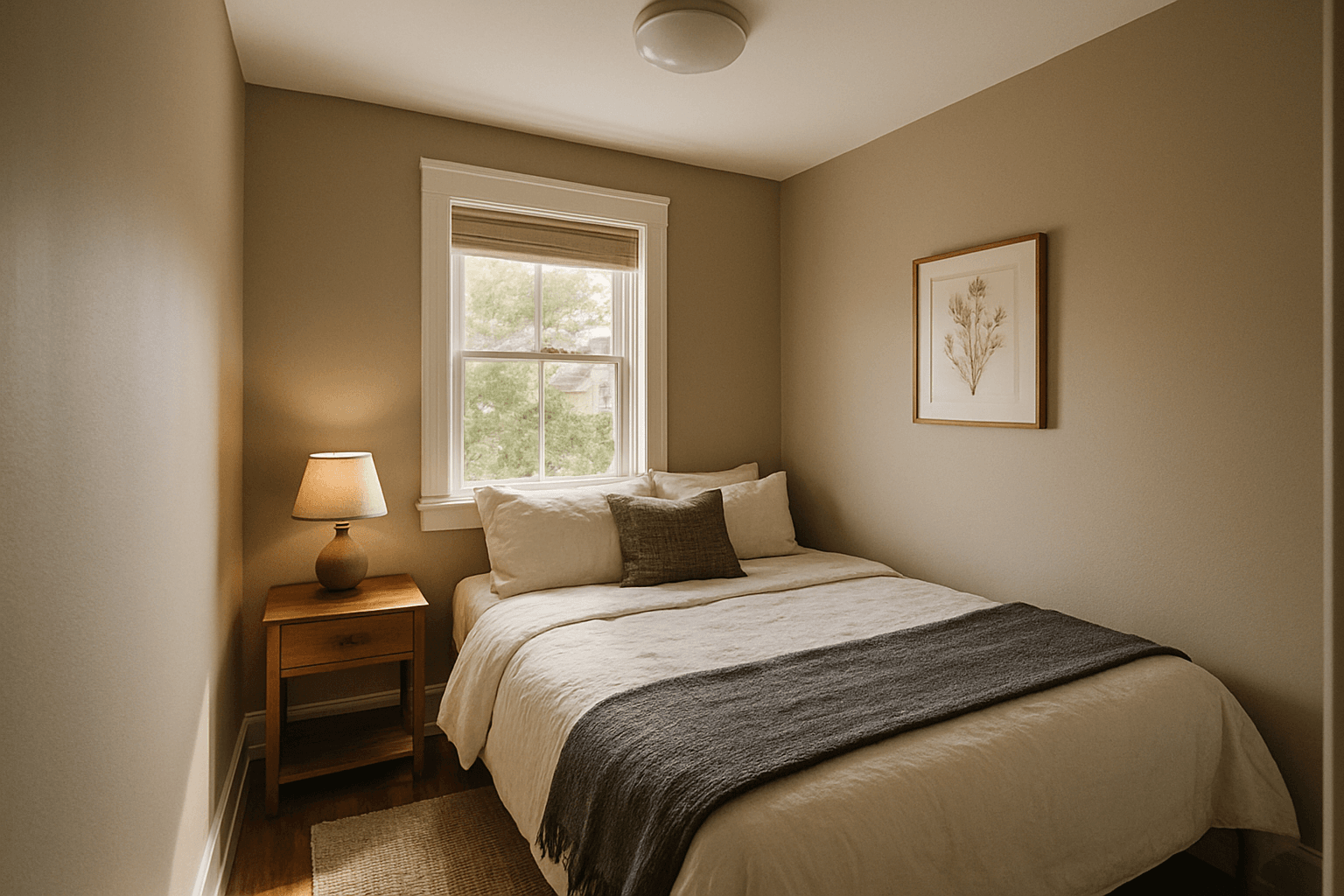
Choosing the best paint colors for small rooms is essential for making spaces feel more open and airy. Light, warm neutrals and soft whites are consistently the top choices. The right color can visually push walls outward and raise ceilings. It transforms a cramped bedroom or hallway into a space that breathes.
Table of Contents
- Why Color Choice Matters More in Small Spaces
- Top Color Families for Small Rooms
- Colors That Can Work Against You
- Best Paint Finishes for Small Rooms
- Things to Know
- Transform Your Small Room With the Right Color
- Frequently Asked Questions
Why Color Choice Matters More in Small Spaces
In a large room, a slightly off color choice is easy to overlook. However, in a small room, the wrong shade can make four walls feel like they are closing in on you. Light reflects differently in tight spaces. Shadows gather faster. Every surface has a stronger visual presence.
According to the Paint and Color Trends Report 2024 from Fixr.com, 81% of interior design and home staging professionals recommend warm neutrals for interiors. They especially recommend them when homeowners want a space to feel polished and inviting. Moreover, that same survey found that 46% of experts say earthy tones are the most popular color palette overall.
These preferences are not arbitrary. Furthermore, warm neutrals like greige, mushroom, and off-white reflect natural light efficiently. This is exactly what a small room needs. Before you decide on a color, it is worth understanding the cost to paint interior of house. This helps you budget realistically for prep, primer, and finish coats.
Top Color Families for Small Rooms
Here is a breakdown of the color families that consistently perform well in small spaces:
| Color Family | Best For | Key Benefit |
|---|---|---|
| Warm Whites | Bedrooms, hallways | Maximum light reflection |
| Soft Greens | Living rooms, offices | Calming, organic feel |
| Greige/Mushroom | Any room | Versatile, modern warmth |
| Pale Blues | Bathrooms | Creates a cool, airy effect |
| Warm Reds (accent walls) | Living rooms | Adds depth and character |
Warm whites and off-whites remain the safest and most effective choice. Shades like Swiss Coffee or Alabaster bounce light around the room without feeling sterile.
Soft greens have emerged strongly in recent trend data. According to Living Cozy’s 2026 color report, green ranks in the top three color choices for nearly all rooms. It feels both grounding and fresh at the same time.
Warm reds as accents may surprise you, but Behr Paint research from 2024 found that 73% of Americans said red can add “depth and character” to a space. Additionally, when used on a single accent wall rather than all four, a muted terracotta or dusty rose can add visual interest. It does this without overwhelming a small room.
If you are dealing with old wallpaper before painting, check our guide on how to paint over wallpaper. This ensures the surface is properly prepared before you start.
Colors That Can Work Against You
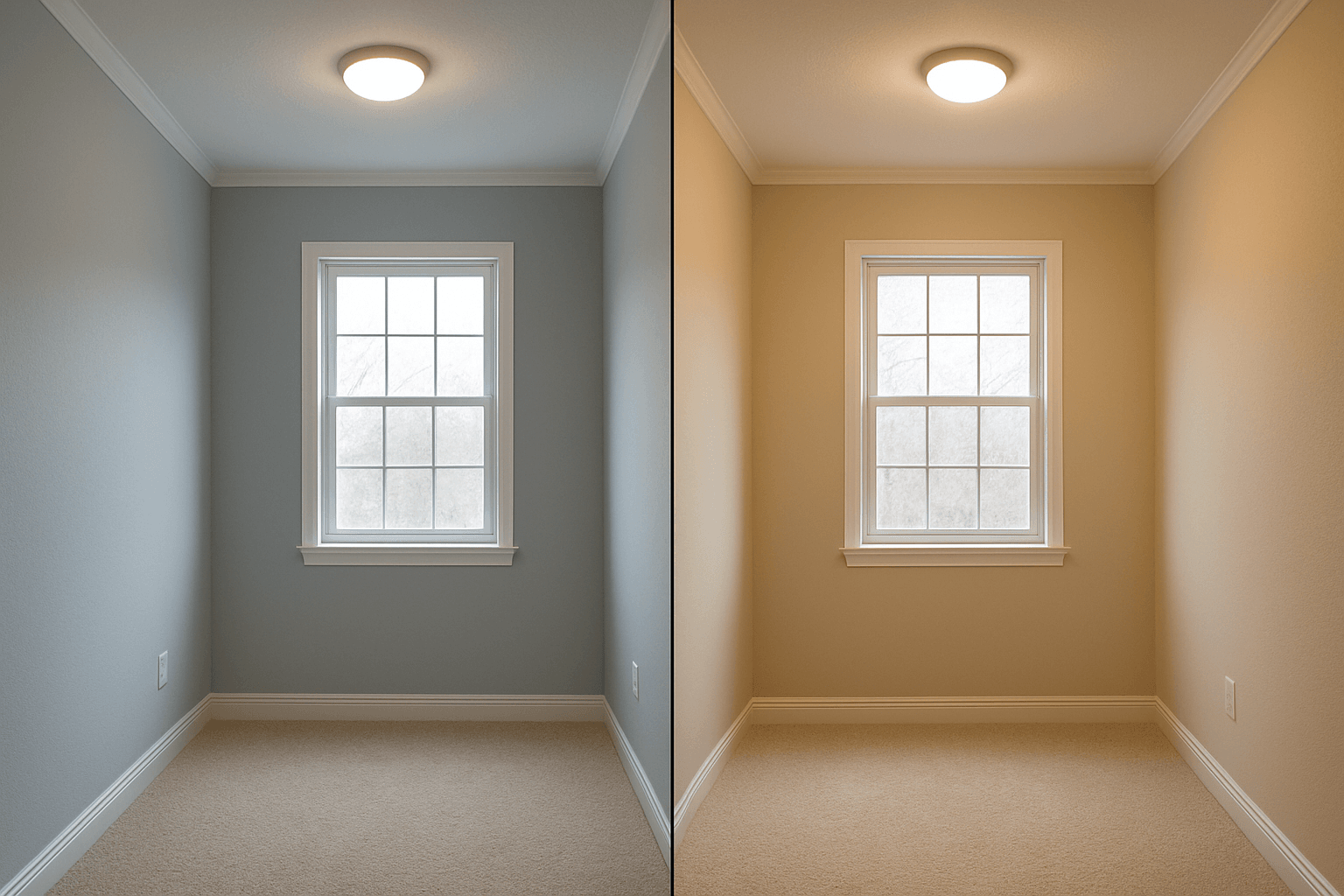
Not every shade belongs in a small space. Saturated dark colors like deep navy or charcoal absorb light and make ceilings feel lower. In addition, cool grays, which dominated interiors for much of the past decade, are being phased out in favor of warmer tones. 2025 trend reporting from Homes & Gardens confirms this shift.
Stark, bright white can also backfire. Without any warmth, it tends to feel clinical. As a result, it highlights imperfections in walls rather than disguises them.
Best Paint Finishes for Small Rooms
Color gets all the attention, but sheen level plays a significant role too. For small rooms, a matte or eggshell finish typically works best. These finishes diffuse light rather than reflect it directly. Therefore, they minimize the appearance of wall imperfections and keep the tone consistent throughout the day.
Save semi-gloss for trim and doors. It creates a subtle contrast that adds architectural interest without competing with the wall color. Additionally, if you are refreshing your kitchen as part of a broader home update, our tips on how to paint kitchen cabinets walk through finish selection in detail.
Things to Know
- Natural light direction matters: north-facing rooms benefit from warmer undertones to compensate for cooler, indirect light.
- Test paint samples on actual walls for at least 24 hours before committing; colors shift significantly as light changes throughout the day.
- Painting the ceiling a shade or two lighter than the walls can create the illusion of greater height.
- If you are planning exterior updates alongside interior work, reviewing the cost to paint exterior of house helps you plan both projects together and potentially save on labor.
Transform Your Small Room With the Right Color
At Glastonbury Professionals House Painters, we have helped Hartford County homeowners make the most of their spaces for over 20 years. Whether you are refreshing a single room or tackling your whole home, our licensed and insured team can help you choose the best paint colors for small rooms. We consider your specific light conditions and layout.
Request your free estimate today and let us put 20 years of residential painting experience to work in your home. Call or fill out our online form to get started with a no-obligation consultation.
Frequently Asked Questions
Q: Should small rooms always be painted white?
White is effective but not the only option for small rooms. Moreover, warm whites work well because of their high light reflectance. However, soft greens, warm greiges, and pale blues can be equally effective. The key factor is warmth in the undertone rather than the color itself.
Q: Does painting the ceiling the same color as the walls help?
Painting walls and ceiling in the same color can make a small room feel more cohesive and enveloping. This technique, sometimes called “color drenching,” removes the visual boundary between wall and ceiling. Furthermore, it works best with soft, muted tones rather than bold or dark shades.
Q: How many paint colors should I use in a small room?
Stick to one primary wall color and a complementary trim color in small rooms. Introducing too many colors fragments the eye and makes the space feel busier and smaller. Therefore, a clean two-tone approach with wall color and white trim tends to read as more spacious.
Q: Are dark colors ever a good choice for small rooms?
Dark colors can work in small rooms when used intentionally, such as on a single accent wall or in strategic areas. In contrast, painting all four walls dark typically makes spaces feel smaller and more confined.