
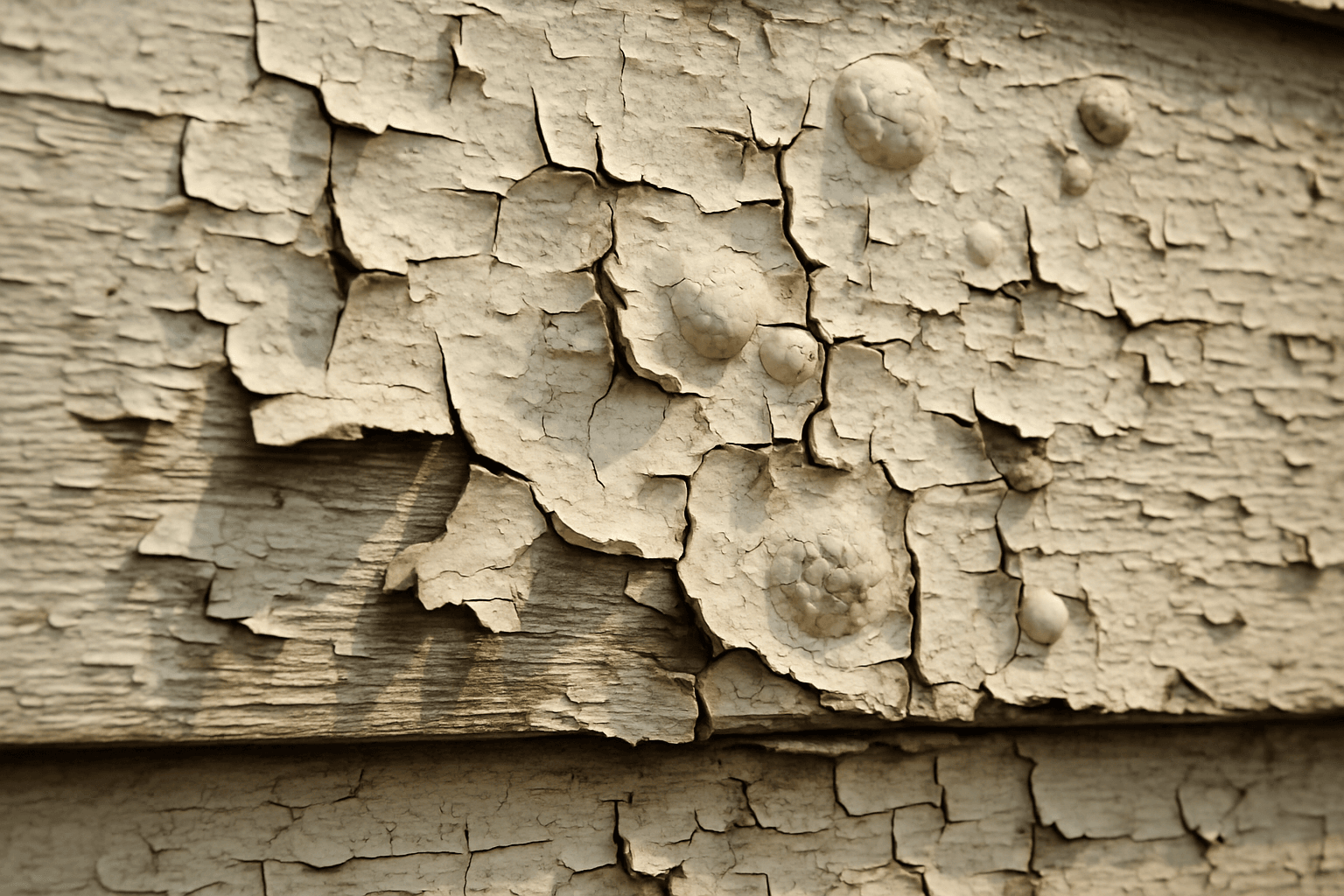
Exterior paint peeling is almost always caused by moisture infiltration, inadequate surface preparation, or paint that has simply reached the end of its lifespan. Understanding the causes of exterior paint peeling and fixes allows you to catch the root cause early. This separation between quick, affordable repair and a full repaint costing thousands of dollars cannot be overstated.
According to the American Housing Survey (AHS, 2023), approximately 2.9 million occupied U.S. homes have peeling paint. That represents roughly 2.2% of the country’s housing stock. Moreover, the average age of U.S. owner-occupied homes now exceeds 40 years, creating a large and growing base of properties requiring regular attention (Dataintelo, March 2026). If your siding shows bubbles, cracks, or flaking, you are far from alone. In fact, the fix is very much within reach.
Table of Contents
- The Main Causes of Exterior Paint Peeling
- How to Diagnose Exterior Paint Peeling Causes and Fixes
- Step-by-Step Fix for Peeling Exterior Paint
- Prevention: How to Stop Exterior Paint Peeling From Happening Again
- Things to Know
Key Takeaways
- Moisture is the single most common driver of exterior paint failure, often originating from inside the home.
- Skipping surface prep before painting is one of the fastest ways to guarantee premature peeling (Alpine Painting, June 2025).
- Peeling near trim, windows, or gutters usually signals a localized leak or drainage issue, not a whole-house repaint.
- A proper fix requires full removal of loose paint, priming bare surfaces, and applying a paint rated for your climate.
- Nearly 42% of homeowners delay exterior paint repairs due to cost concerns (MyFinancialPrograms Home Repair Survey, 2025), but delaying typically makes repairs more expensive.
- In 2026, professional exterior painting services are widely accessible — 29% of homeowners hired a pro in 2025, and 70% said they planned to again (Vanderkolk Painting).
The Main Causes of Exterior Paint Peeling
Understanding why paint fails is the first step in fixing it correctly. The three primary causes of exterior paint failure are moisture infiltration, inadequate surface preparation, and age, according to industry research cited by Alpine Painting.
Moisture infiltration is the top offender. Water enters from the outside through failed caulk, cracked siding, or poor drainage around windows. Additionally, it can push outward from inside the home — steam from kitchens and bathrooms migrates through walls and lifts paint from beneath. Sherwin-Williams notes that peeling caused by moisture often appears as bubbling before it cracks and flakes, which serves as a useful early warning sign.
Poor surface preparation is equally damaging. Applying new paint over dirty, chalky, or previously peeling surfaces creates a weak bond from the start. Skipping proper cleaning or not addressing existing corrosion before applying new paint causes premature failure (Alpine Painting, June 2025). This principle holds true for a fresh coat on a Hartford County colonial and for commercial facilities alike.
Age and UV degradation round out the top three causes. Paint exposed to years of New England freeze-thaw cycles, summer humidity, and UV radiation naturally breaks down. Most exterior paint formulas carry a lifespan of 5 to 10 years before requiring recoating under normal conditions. When that window passes without maintenance, peeling accelerates quickly.
How to Diagnose Exterior Paint Peeling Causes and Fixes
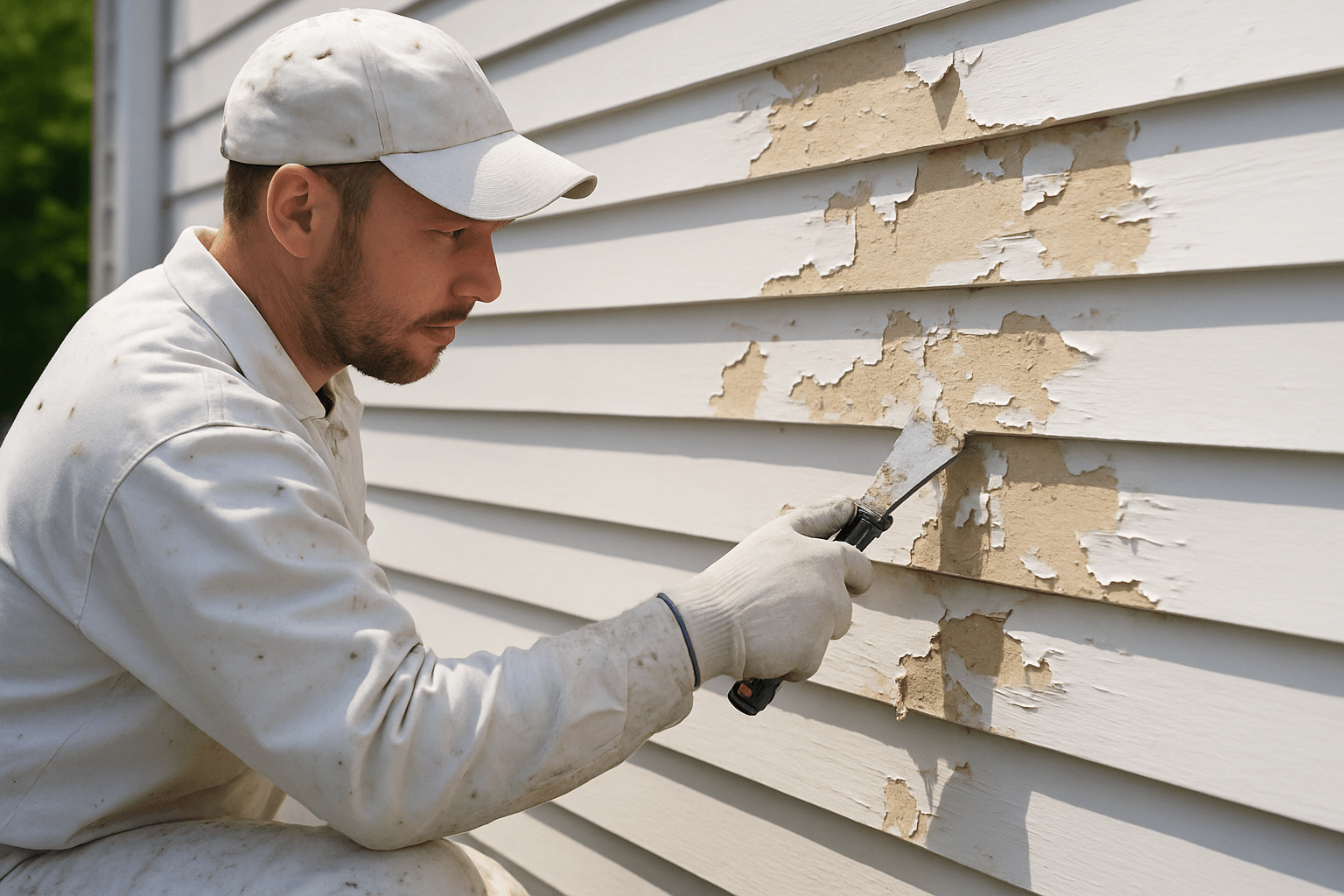
Before picking up a scraper, spend 15 minutes doing a visual inspection. The location of peeling tells you a lot about what causes it.
- Peeling near windows, doors, or trim: This usually points to caulk failure or water intrusion from outside. Check the caulk lines carefully.
- Peeling high on walls or under eaves: Often caused by interior moisture pushing outward. Look for bathroom exhaust fans venting into the attic rather than outside.
- Widespread peeling across entire surfaces: Typically age-related or the result of poor prep on the previous paint job.
- Peeling only on south-facing walls: Heavy UV exposure is the likely driver.
Rhino Shield Florida recommends pressing your thumb against a painted surface and twisting slightly. If the paint powders or separates easily, the film has lost its adhesion. Therefore, the entire surface likely needs attention, not just a spot fix with exterior house painting contractors near me.
Step-by-Step Fix for Peeling Exterior Paint
Once you know the cause, the repair process follows a clear sequence. Cutting corners at any stage brings you right back to square one within a year or two.
1. Address the root cause first. Repair leaky gutters, reseal caulk around windows, fix roof flashing, or redirect drainage away from the foundation. No amount of fresh paint holds if the underlying moisture issue remains.
2. Scrape and sand all loose paint. Remove every flaking piece completely. Feather the edges with 80- to 120-grit sandpaper so the transition from old paint to bare wood is smooth. Brush Hour LLC recommends using a wire brush on any corroded metal surfaces before sanding.
3. Clean the surface thoroughly. Power washing removes dirt, mildew, and chalk. Allow at least 48 hours of drying time before priming, especially on wood siding.
4. Prime bare surfaces. Bare wood and patched areas require priming before topcoating. A high-quality exterior primer seals porous surfaces. Furthermore, it dramatically improves topcoat adhesion.
5. Apply two coats of exterior paint. Use a product formulated for your climate. In Connecticut, that means a paint rated for temperature flexibility and moisture resistance. Apply in dry conditions, with temperatures between 50°F and 90°F.
If you are tackling a two-story home or dealing with lead paint on pre-1978 siding, working with a professional painter is the safer choice. In addition, it is often more cost-effective.
Prevention: How to Stop Exterior Paint Peeling From Happening Again
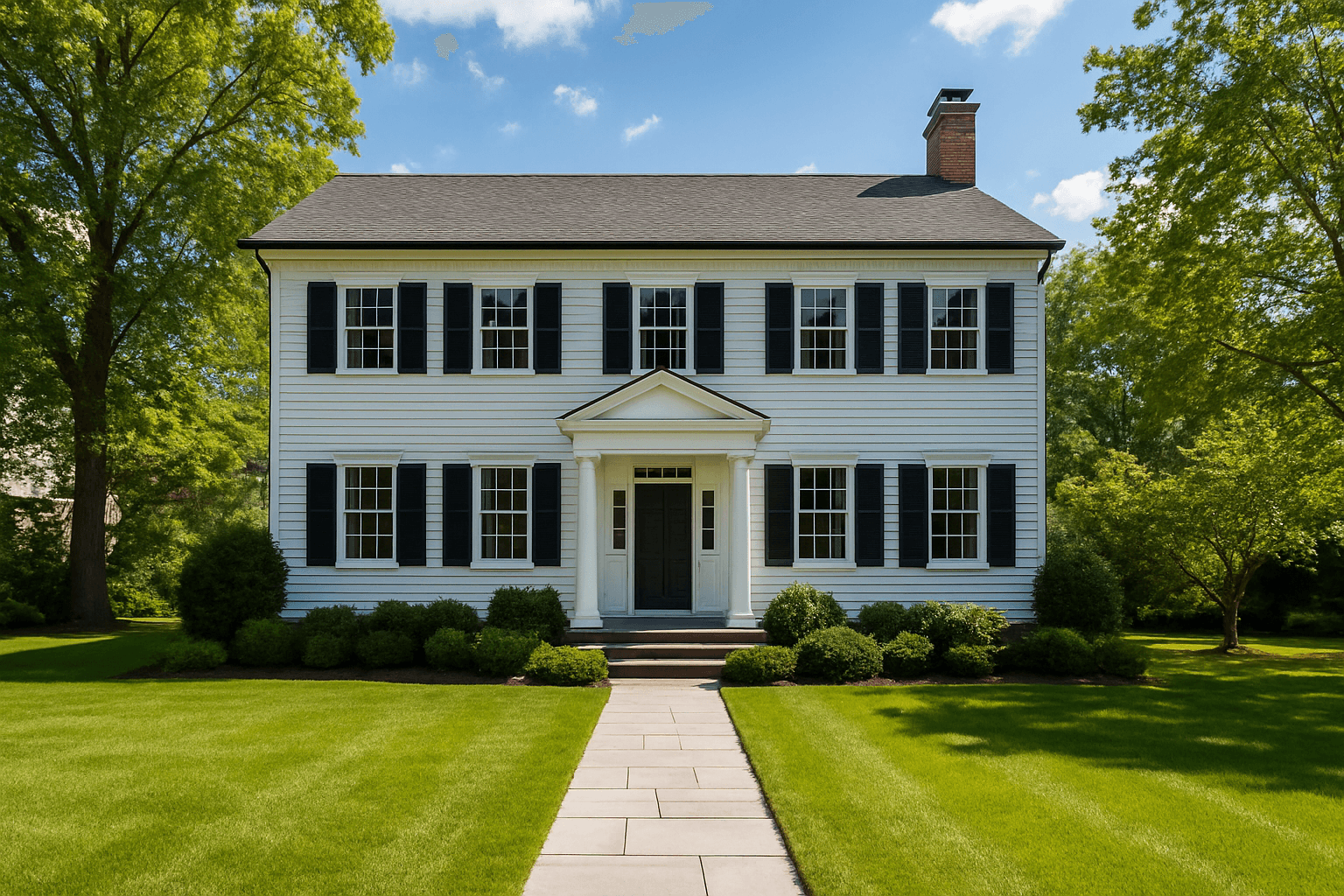
A good paint job, done correctly, should last 7 to 10 years on most exterior surfaces. Here is how to protect that investment.
- Inspect caulk around every window, door, and penetration annually. Replace any that is cracking or pulling away.
- Keep gutters clean and functioning so water drains away from the siding.
- Trim back shrubs and trees that trap moisture against the house.
- Make sure bathroom and kitchen fans vent to the exterior, not into wall cavities or attics.
- Schedule a visual inspection of your paint every spring, especially after a harsh winter.
Interior color choices can affect how you think about your home’s overall aesthetic. If you are refreshing the outside, it is also a good time to revisit accent wall color ideas living room or explore best gray paint colors for living room while the painting mindset is fresh. Moreover, if interior doors are due for a refresh as well, check our post on how to paint interior doors for a step-by-step walkthrough.
Things to Know
- Lead paint is a serious health hazard in homes built before 1978. The EPA’s Renovation, Repair, and Painting (RRP) Rule requires certified contractors for any work that disturbs lead-based paint.
- Painting over wet or damp wood is one of the fastest routes to repeat peeling. Always verify moisture content before priming.
- Oil-based paints were common on older homes. Applying latex over oil without proper priming can cause adhesion failure within months.
- Chalky or powdery surfaces need a bonding primer before any topcoat, not just a light sanding.
- Almost 42% of homeowners delay exterior paint repairs due to cost (MyFinancialPrograms Home Repair Survey, 2025). Delayed repairs almost always cost more when water damage spreads to sheathing or framing.
Ready to Stop Peeling Paint for Good? Let’s Talk.
If you are tired of watching your paint bubble, crack, and fall away every couple of years, the problem is almost certainly the preparation or an unresolved moisture issue — not just the paint brand. Glastonbury Professionals House Painters has served Hartford County homeowners for over 20 years with licensed, insured exterior painting built to last.
Request a free estimate and let us identify exactly what is causing your peeling before applying a single drop of paint. Tell us what you are seeing, and we will walk you through the right fix.
Frequently Asked Questions
Q: How do I know if peeling paint is caused by moisture or just old age?
Moisture-caused peeling usually starts with bubbling or blistering before the paint cracks and flakes off. Age-related peeling tends to look more like widespread chalking or cracking without the bubble stage. Check if the peeling is concentrated near windows, doors, or areas with poor drainage — those patterns strongly suggest water is the culprit.
Q: Can I paint over peeling paint without scraping it off first?
No — painting over peeling paint almost guarantees the new coat will fail quickly. The new layer bonds to the loose old layer rather than the substrate, so it peels along with everything underneath. Full removal of loose paint, followed by sanding, priming, and topcoating, is the only repair sequence that holds long-term.
Q: How much does it cost to fix peeling exterior paint on a typical home?
Costs vary widely depending on how much surface is affected, whether moisture damage has reached the wood, and local labor rates. Spot repairs on a small section of siding are far less expensive than a full repaint with substrate repairs. Getting a professional assessment before budgeting is the most reliable way to avoid surprises.
Q: Does exterior paint peeling affect home value?
Yes — peeling paint is one of the most visible signs of deferred maintenance. It can reduce curb appeal and perceived value significantly. Buyers and appraisers notice it immediately. Beyond aesthetics, exposed wood invites rot and structural damage that is far costlier to address than a timely repaint.
Q: How long should exterior paint last before it starts peeling?
Quality exterior paint, applied over a properly prepared surface, should last 7 to 10 years under normal conditions. Harsher climates, direct sun exposure, and moisture-prone areas may shorten that window. Regular inspections and prompt caulk maintenance are the easiest ways to extend the life of any paint job.
The Bottom Line on Exterior Paint Peeling Causes and Fixes
Peeling paint is rarely random. It tells you something specific about moisture levels, surface prep, or the age of your coating — and each cause has a clear fix. Addressing the root problem before repainting is what separates a repair that lasts a decade from one that fails in a single season.
If you are ready to stop guessing and get a professional set of eyes on your siding, reach out to Glastonbury Professionals House Painters for a no-obligation assessment and free estimate.