
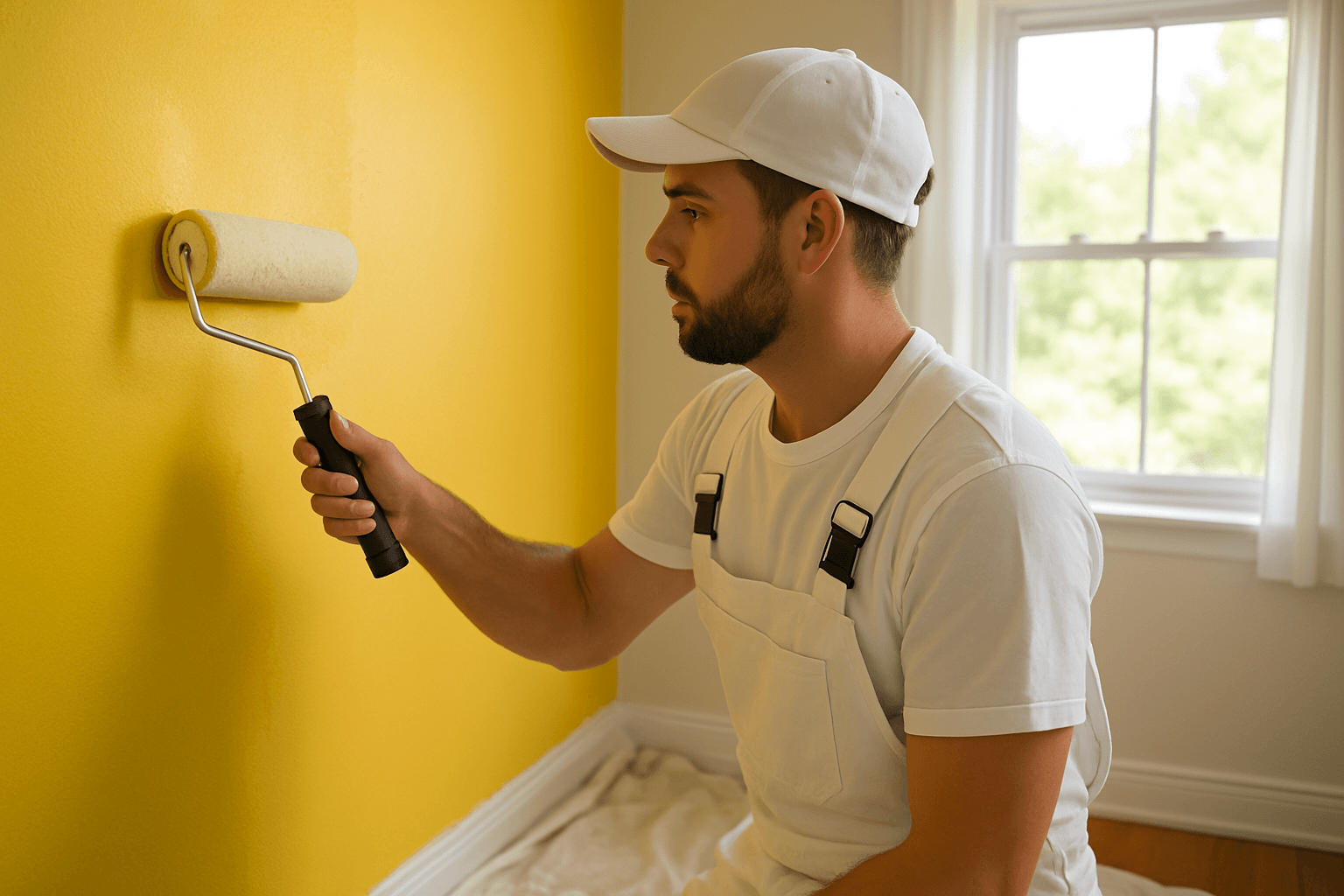
The interior painting cost per room typically falls between $350 and $1,100. According to Angi (2026) and HomeGuide (2026), the national average sits around $624 per room. However, your final cost will depend on room size, ceiling height, paint quality, and local labor rates.
Table of Contents
- What Affects Interior Painting Cost Per Room
- Room-by-Room Interior Painting Cost Per Room Breakdown
- Labor vs. Materials: Where Your Money Goes
- How to Get an Accurate Estimate
- Things to Know
- Book Your Interior Painting Estimate Today
Key Takeaways
- Average interior painting cost per room runs $350 to $1,100, with a national average near $624 (Facade Colorizer, 2026).
- Labor accounts for 70% to 85% of your total bill. Choosing the right contractor matters as much as choosing paint (HomeGuide, 2026).
- Room type, size, and condition all shift prices significantly. Bathrooms average $150 to $400, while living rooms can reach $1,500.
- Professional painters charge $2 to $6 per square foot in most markets (Angi, 2026).
- Getting two or three written estimates before committing is always a smart move.
- Prepping surfaces, patching holes, and clearing furniture yourself can meaningfully lower your labor costs.
What Affects Interior Painting Cost Per Room
No two rooms price out the same. Understanding what drives the numbers helps you budget realistically. Here are the main factors contractors weigh when putting together a quote.
Room size and ceiling height. Square footage is the starting point for most estimates. Professionals charge $2 to $6 per square foot. Additionally, when you factor in walls, trim, and ceilings together, that rate can reach $4.70 per square foot on average, according to Angi (2026). Taller ceilings require ladders or scaffolding, which adds labor time and expense.
Surface condition. A room with existing damage, peeling paint, water stains, or heavy texture takes considerably more prep work. Contractors factor that prep into the total price. Therefore, a freshly drywalled room will cost less to paint than one that needs significant repair.
Paint quality. Standard interior latex paint typically runs $25 to $70 per gallon. In contrast, premium or zero-VOC options push higher. Higher-sheen finishes like satin or semi-gloss also tend to cost a bit more to apply because they require more careful technique.
Color changes. Going from a dark wall to a light one (or vice versa) may require additional coats to achieve full coverage. Most professional jobs include two coats as standard. However, dramatic color shifts can add a third coat.
Trim, doors, and ceilings. Painting just the walls is the baseline. Moreover, adding trim, baseboards, crown molding, or ceilings increases the price. If you’re curious about the specifics of door finishing, the how to paint interior doors process alone involves several steps that take real time.

Room-by-Room Interior Painting Cost Per Room Breakdown
Here’s a quick-reference table based on verified 2026 pricing data from SD Custom Painting (2026) and cross-referenced against multiple industry sources.
| Room Type | Typical Cost Range | Notes |
|---|---|---|
| Bathroom | $150 – $400 | Small square footage, but moisture-resistant paint needed |
| Bedroom (standard) | $350 – $850 | Most common residential paint job |
| Kitchen | $500 – $1,200 | Cabinetry, trim, and grease-prep add complexity |
| Living Room | $600 – $1,500 | Larger square footage; accent walls may vary |
| Whole house (average) | $2.75/sq ft (walls only) | Per Angi, 2026 |
Living rooms tend to sit at the higher end because of their size. Furthermore, homeowners often want more elaborate finishes in these spaces. If you’re exploring color direction for that space, browsing accent wall color ideas living room can help you figure out scope before you call a painter. Similarly, if neutral tones are your preference, looking at best gray paint colors for living room gives you a practical starting point for your color conversation with a contractor.
Bathrooms are usually the most affordable rooms to paint because of their compact size. However, the need for mold-resistant, moisture-tolerant paint can add a small premium to materials.
Labor vs. Materials: Where Your Money Goes
This is where many homeowners are surprised. Labor costs alone account for 70% to 85% of your total paint job, according to HomeGuide (2026). As a result, only 15% to 30% of what you pay goes toward actual paint and supplies.
Professional painting involves more than rolling color on a wall. Contractors tape edges, protect floors and furniture, apply primer where needed, fill nail holes, and sand surfaces. They apply multiple coats and clean up afterward. This process takes hours. Skilled labor in 2026 costs accordingly.
This is also why painting prices have crept up recently. Facade Colorizer (2026) reports that the national average hit roughly $624 per room in 2026. This represents a 5 to 6 percent increase from mid-2025, driven almost entirely by rising labor costs.
For homeowners watching a budget, one practical approach works well. Handle prep yourself—move furniture, wash walls, and tape baseboards—so the crew can focus purely on painting.

How to Get an Accurate Estimate
Getting a reliable quote starts with knowing what to share with your contractor. Here’s a practical checklist:
- Measure your rooms. Note the square footage of each room you want painted.
- Identify what’s being painted. Are you painting walls only, or walls plus ceilings, trim, and doors?
- Note surface conditions. Flag any stains, holes, or previous paint issues upfront.
- Have your color direction ready. Knowing whether you’re making a dramatic or subtle change helps the contractor price coverage accurately.
- Request written, itemized quotes. Ask for a breakdown that separates labor, materials, and any prep fees.
- Compare at least two to three bids. Pricing varies meaningfully between contractors. Additionally, when seeking exterior house painting contractors near me alongside your interior quotes, you can potentially bundle projects and negotiate better overall pricing.
Things to Know
- Primer isn’t always included. Some contractors price primer separately, especially if walls are going from dark to light. Confirm this in writing before work begins.
- “Per room” quotes vary widely by definition. One contractor’s “room” might include the ceiling; another’s might not. Get clarity upfront.
- Painting services are growing. The painting services market was valued at $164.18 million in 2024 and is projected to grow at a compound annual growth rate of 8.66% through 2032 (Research and Markets, 2025). Scheduling early can help you lock in better availability and pricing.
- Ventilation matters during and after painting. Most interior paints need adequate airflow to cure properly. This also minimizes fume exposure during application.
- Touch-up paint should be kept on hand. Ask your contractor to leave a small amount of mixed paint for future scuffs or repairs. It’s far cheaper than a new paint run.
Book Your Interior Painting Estimate Today
Knowing the numbers is a solid first step. However, getting a real quote for your specific home is where the real planning begins. Glastonbury Professionals House Painters has served Hartford County homeowners for over 20 years, delivering licensed, insured, and bonded interior painting work that holds up. Whether you’re refreshing one bedroom or repainting an entire floor, our team gives you honest pricing without the runaround.
Request your free estimate and get a written, room-by-room breakdown for your project within 48 hours.
Frequently Asked Questions
Q: How much does it cost to paint a 12×12 room?
A standard 12×12 bedroom typically costs between $350 and $850 to paint professionally. This range accounts for walls only with two coats of paint. Adding ceiling, trim, or doors increases the total. Surface prep needs also affect the final price.
Q: Is it cheaper to paint a room yourself or hire a professional?
DIY costs less upfront, but professional results are typically cleaner and more durable. A DIY job might run $100 to $200 in materials. However, factoring in your time, equipment rental, and the risk of uneven finish, many homeowners find professional work the better value.
Q: Do painters charge by room or by square foot?
Both pricing methods are common, and some contractors use a combination of the two. Per-room pricing is simpler for homeowners to compare. Meanwhile, per-square-foot pricing tends to be more precise for larger or unusually shaped spaces. Always ask which method your contractor uses and what’s included.
Q: How long does it take to paint one room?
Most professional crews can paint a standard bedroom in four to eight hours. Larger rooms, additional coats, or complex prep work push that timeline higher. A living room with high ceilings and detailed trim might take a full day or more.
Q: What is the best time of year to have interior painting done?
Interior painting can be done year-round, but spring and fall tend to offer the best scheduling availability. Summer is peak season for painters. Therefore, booking in late winter or early spring can help you secure preferred dates. Temperature and humidity inside your home matter more than outdoor conditions for interior work.
The Bottom Line on Interior Painting Cost Per Room
The interior painting cost per room sits between $350 and $1,100 for most homeowners. Labor makes up the biggest slice of that total. Knowing your room sizes, surface conditions, and exactly what’s being painted puts you in a much stronger position when comparing quotes.
If you’re in Hartford County and ready to move forward, reach out to Glastonbury Professionals House Painters for a no-pressure, written estimate tailored to your home.