
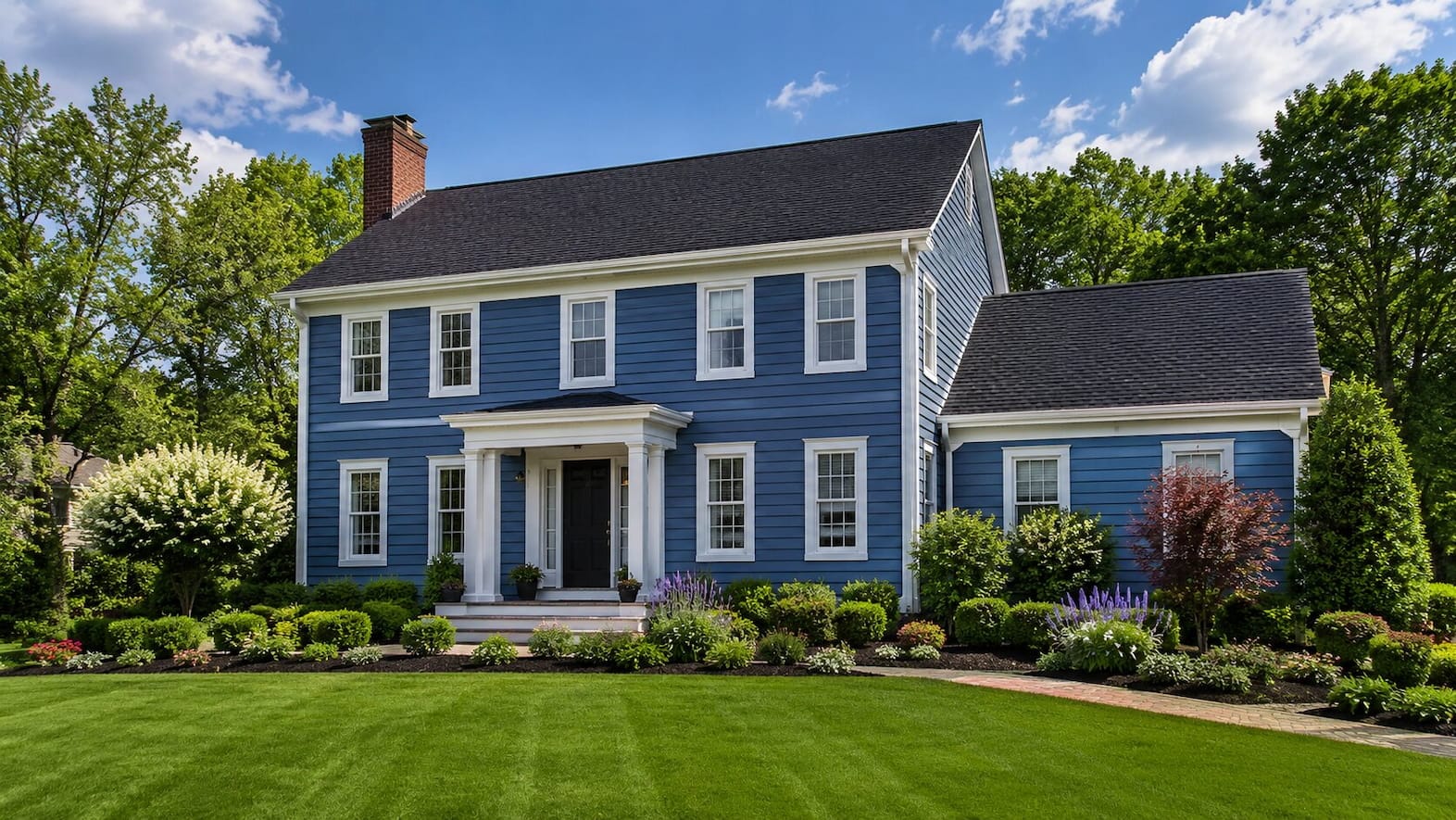
Blue has remained one of the most dependable choices for home exteriors because it adapts well to classic architecture, changing seasons, and New England landscapes. In Glastonbury, CT, where colonial and Cape-style homes define many neighborhoods, the right shade of blue can sharpen curb appeal without feeling overly trendy or out of place.
Choosing among today’s blue exterior paint colors takes more than picking a swatch online.
Natural light, roof color, trim contrast, and even nearby homes can completely change how a color looks once it’s painted across siding. The strongest blue house exteriors are carefully balanced, not rushed.
What’s In This Guide
- Best Blue Shades for Colonial, Cape, and Traditional Homes
- How Natural Light Changes Blue Paint Outdoors
- Light Blue vs. Dark Blue: Which Works Better?
- Timeless Blue Tones vs. Trendy Blue Tones
- How to Choose the Right Blue Exterior Paint Color
- Frequently Asked Questions (FAQs)
- Refresh Your Home With the Right Shade of Blue
Quick Facts
- Blue shades should match the home’s architectural style.
- Light blue works well for smaller or shaded homes.
- Dark blue fits larger homes with strong contrast.
- White trim feels classic, while black and gray add contrast.
- Large outdoor samples help prevent color surprises.
Best Blue Shades for Colonial, Cape, and Traditional Homes
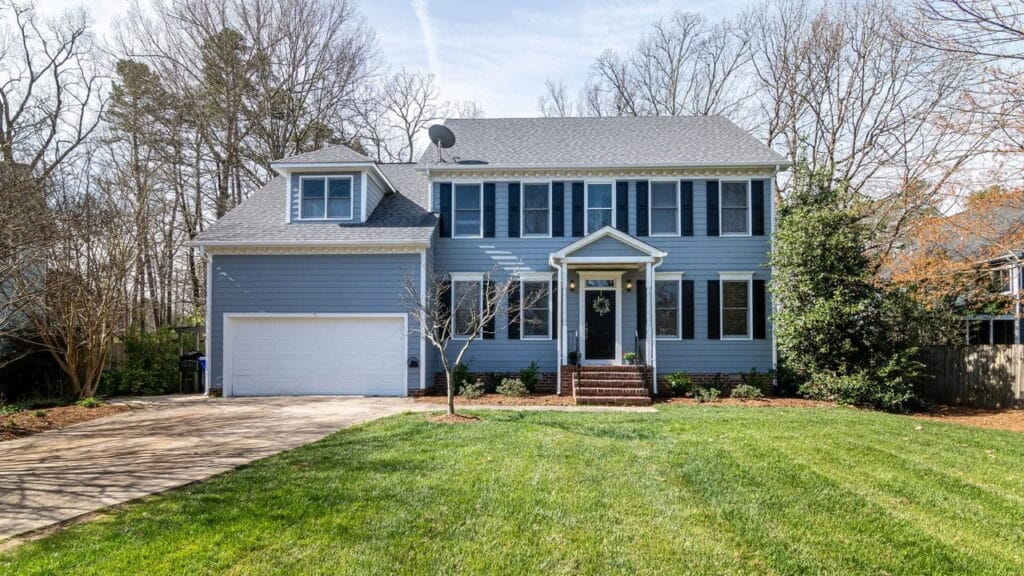
Different home styles respond to blue in different ways. A navy that looks elegant on a colonial may feel too heavy on a smaller Cape home, while a pale blue that brightens a Cape may look too soft on a larger home with strong architectural lines.
Colonial Homes: Muted Navy and Blue-Gray
Colonial homes typically have symmetrical architecture, shutters, and strong trim lines. Deep blue tones complement that structure well.
Popular choices include:
- Slate blue
- Smoky navy
- Blue-gray
- Historic Williamsburg blue
These blue exterior house colors pair naturally with:
- Crisp white trim
- Black shutters
- Natural wood front doors
A muted navy often feels timeless because it carries gray undertones instead of appearing overly saturated.
Cape-Style Homes: Softer and Lighter Blues
Cape homes usually benefit from softer contrast and lighter palettes. Light blue exterior house colors help smaller homes feel brighter and more inviting without overwhelming the architecture.
Good options include:
- Dusty coastal blue
- Gray-blue
- Soft sky blue
- Muted powder blue
White trim works especially well here because it keeps the exterior clean and classic.
Traditional Homes: Mid-Tone Blues
Traditional homes offer the most flexibility. Mid-tone blue exterior paint colors strike a comfortable middle ground between bold and understated.
Denim blue and medium blue-gray shades work especially well on:
- Vinyl siding
- Wood clapboard
- Mixed stone-and-siding exteriors
These tones also adapt well to seasonal landscaping changes throughout Connecticut.
How Natural Light Changes Blue Paint Outdoors
One of the biggest mistakes homeowners make is choosing paint based only on an indoor sample. Exterior lighting changes color dramatically throughout the day.
Sunlight exposure, surrounding landscaping, and fixed exterior materials all influence how paint appears outdoors.
North-Facing Homes
North-facing homes tend to pull cooler undertones from paint colors. Blue can appear:
- Darker
- Grayer
- More muted
This often works well with colonial-style homes, but may make some bright blues feel dull.
South-Facing Homes
South-facing homes receive stronger sunlight throughout the day. Blue shades often appear:
- Brighter
- Warmer
- More vibrant
In these settings, highly saturated blues may become overwhelming.
Why Sample Testing Matters
Large test patches reveal far more than small paint chips. Many professional painters recommend viewing samples:
- Morning
- Midday
- Late afternoon
- Overcast conditions
This helps homeowners avoid color surprises before the full exterior is painted.
MORE ON THIS TOPIC: 2026 Interior Paint Trends: Warm Neutrals, Jewel Tones & Nature-Inspired Greens
Light Blue vs. Dark Blue: Which Works Better?
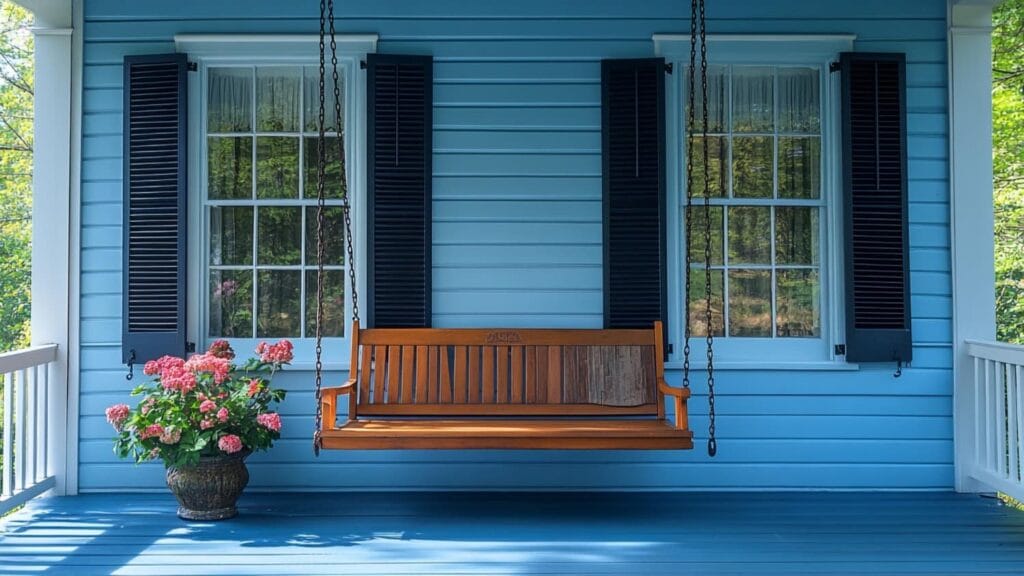
Not every home benefits from dark blue siding. The better choice depends on architecture, lot size, lighting, and surrounding homes.
When Light Blue Exterior House Colors Work Best
Light blue exterior house colors are often ideal for:
- Smaller homes
- Cape Cod architecture
- Homes with limited sunlight
- Properties with heavy landscaping
They create a softer appearance and reflect more natural light.
Light blues also pair well with:
- White trim
- Gray roofing
- Soft stone accents
When Dark Blue Works Best
Dark blue works best when a home has:
- Strong symmetry
- Larger scale
- Clean trim contrast
- Ample sunlight
Deep navy and slate blue create sophisticated blue house exteriors, especially when paired with white trim and black shutters.
However, dark paint can highlight:
- Surface imperfections
- Fading
- Uneven siding texture
That makes proper prep work especially important.
Timeless Blue Tones vs. Trendy Blue Tones
Some shades age better than others.
Timeless Blue Exterior Paint Colors
Classic choices usually contain muted or gray undertones.
Examples include:
- Slate blue
- Smoky navy
- Blue-gray
- Historic muted blues
These shades complement traditional architecture and tend to remain appealing over time.
Trendier Blues to Use Carefully
Highly saturated blues can feel modern initially, but may become dated faster.
Examples include:
- Bright aqua
- Strong teal
- Electric blue
- Intense royal blue
These shades often work better on doors, shutters, or accents instead of the entire exterior.
How to Choose the Right Blue Exterior Paint Color
Step 1: Start With the Home’s Architecture
Colonial, Cape, and traditional homes all respond differently to blue paint. A shade that complements a symmetrical colonial may feel too bold or too muted on a smaller Cape-style home.
Step 2: Look at Permanent Exterior Features
Evaluate:
- Roofing
- Brick
- Stone
- Walkways
- Shutters
Your paint color should coordinate with these fixed elements.
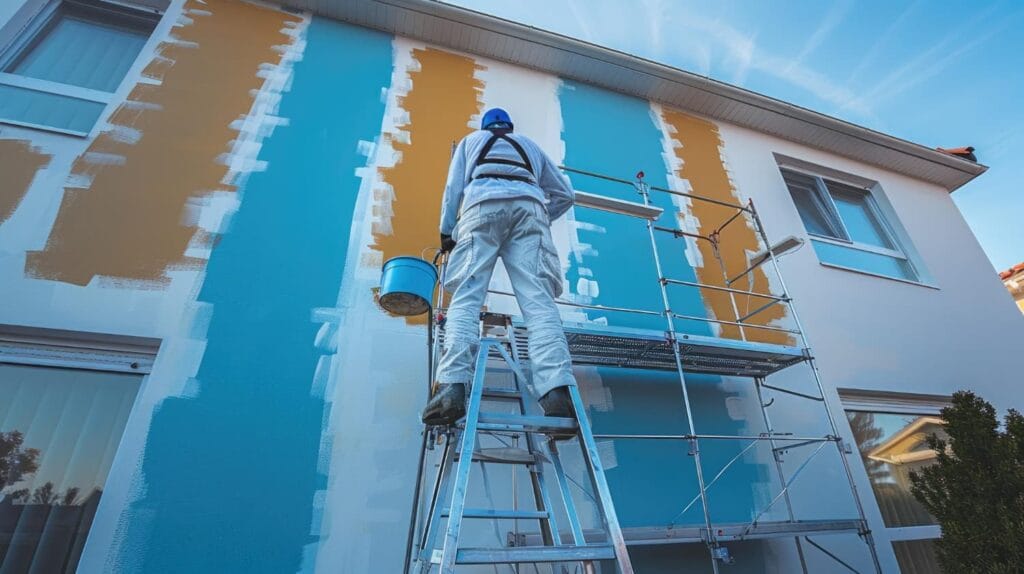
Step 3: Test Multiple Shades
Compare:
- One light blue
- One mid-tone blue
- One dark blue
Large samples produce more accurate results.
Step 4: Evaluate the Color Outdoors
Check the samples during different lighting conditions. Blue tones can shift noticeably between morning sun, afternoon brightness, and shaded evening light.
Step 5: Finalize Trim and Accent Colors Together
Siding and trim should never be selected separately. Coordinating shutters, doors, and trim at the same time creates a more cohesive and polished exterior appearance.
Step 6: Hire an Exterior Painting Contractor Near Me
Professional painters help homeowners:
- Test colors properly
- Prepare surfaces correctly
- Achieve cleaner paint lines
- Improve finish durability
For homeowners searching for an exterior painting contractor near me, local experience matters because Glastonbury homes face seasonal moisture, changing temperatures, sun exposure, and winter wear.
Frequently Asked Questions (FAQs)
What blue exterior paint color works best with red brick?
Blue-gray, slate blue, and muted navy usually work best with red brick because they balance the warmth of the brick without creating harsh contrast.
Can blue exterior paint work with beige or tan trim?
Yes. Blue can work with beige or tan trim, but softer blue-gray or muted medium blue shades usually look more balanced than bright or highly saturated blues.
Is blue a good exterior color for homes with black shutters?
Yes. Blue siding with black shutters can look classic and polished, especially when paired with white trim to keep the exterior from feeling too dark.
What front door color looks good with a blue house?
Natural wood, black, deep red, white, and soft gray front doors can all work well with blue siding, depending on the trim, roof, and overall style of the home.
How many paint samples should I test before choosing a blue exterior color?
Testing at least three blue shades is a good starting point: one light, one mid-tone, and one darker option. This helps you compare how each color looks in real outdoor light.
Refresh Your Home With the Right Shade of Blue
The best blue exterior paint colors feel balanced with the home’s architecture, lighting, and surroundings. Testing shades carefully and pairing them with the right trim can make the difference between a color that simply looks nice and one that truly elevates curb appeal.
For homeowners ready to update their blue house exteriors, Glastonbury Professionals House Painters provides professional exterior painting services, color guidance, and detailed surface preparation in Glastonbury, CT.